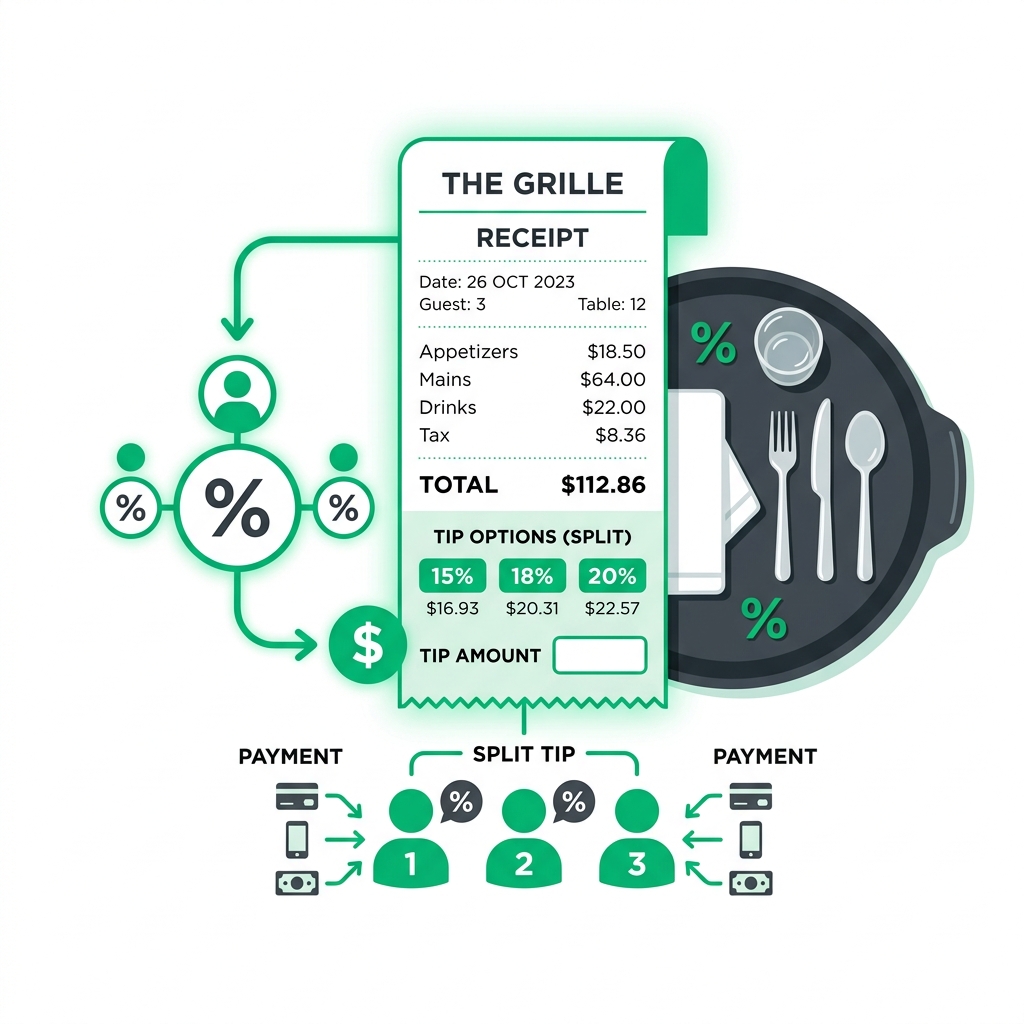
Eating out is one of the most common social activities around the world, yet the end of the meal is often accompanied by a quiet moment of financial calculations. Tipping, which originated as a small reward for superior service, has evolved into a highly structured cultural expectation. If you want a fast way to split checks, using a restaurant tip calculator or a tip calculator free web tool is the best option. Rather than doing math on paper, a simple tip calculator app or a free tip calculator app solves split ratios instantly. Navigating these rules requires understanding both local customs and the mathematics of split checks.
The Tipping Dilemma: Standards Across Regions
The biggest driver of tipping confusion is geography. Here is how tipping expectations break down globally:
- The United States & Canada: In North America, tipping is essentially institutionalized. In the US, the federal minimum wage for tipped employees is significantly lower than the standard minimum wage. As a result, leaving a 15% to 20% tip is standard. Leaving less than 15% is usually interpreted as a sign of poor service, while 22% or more represents outstanding service.
- Europe (Eurozone): In most European nations, service charge (*service compris*) is already factored into the menu prices. Therefore, tipping is not compulsory. Diners typically round up the bill to the next convenient amount or leave a 5% to 10% cash tip on the table for good service.
- The United Kingdom: Tipping in UK restaurants is generally set at 10% to 12.5%. However, double check your bill before adding a tip, as many establishments include a discretionary service charge directly on the invoice.
- Asia & Oceania: In Japan and South Korea, there is no tipping culture; attempts to tip can cause confusion or be politely refused. In Australia and New Zealand, tipping is not expected, though rounding up the bill at high-end venues is appreciated.
How to Split the Bill Smoothly
When dining in a group, splitting the check can become a source of social friction. There are two primary methods for splitting checks:
- The Even Split: The total bill (including tax and tip) is divided equally by the number of diners. This is the fastest method and is best suited for groups where everyone ordered roughly similar amounts of food and drink.
- The Itemized Split: Each person pays exactly for what they consumed, plus their proportional share of the tax and tip. While more accurate, it requires more calculation.
To eliminate these calculations and avoid debates at the table, using an interactive Tip and Bill Splitter is highly recommended. It calculates exact gratuity ratios, splits totals evenly, and applies rounding modes instantly so that everyone pays clean, whole numbers.
Rounding Rules and Cash Splits
One of the most practical features of modern gratuity planning is check rounding. For example, if an even split results in each person owing $23.67, collecting cash or managing multiple Venmo requests becomes annoying. Rounding the individual per-person share to the nearest dollar ($24.00) simplifies everything, and any extra cent collected simply increases the server's final tip.